

Improve Layer FCR: 10 Ways to Boost Egg Efficiency
Feed represents the largest cost on most layer farms. That is why improving your Feed Conversion Ratio (FCR) is one of the fastest ways to increase profitability. A better FCR means your hens produce more eggs from the same amount of feed, resulting in lower production costs and higher returns.
In this article, you will learn what FCR is, how to calculate it, and which nutritional and management strategies can help you improve FCR in layer chickens.
What is FCR in Layer Farming?
Feed Conversion Ratio (FCR) measures how efficiently hens convert feed into eggs. It is calculated as:
FCR = Feed Intake (kg) ÷ Egg Mass Produced (kg)
For example:
Feed consumed: 30 kg
Egg production: 15 kg
FCR = 30 ÷ 15 = 2.0
The lower the FCR, the better your flock is utilizing feed.
Why FCR Matters
A good FCR helps to:
Reduce feed costs per egg produced
Improve farm profitability
Increase efficiency of production
Monitor flock performance
Detect nutritional or management issues early
For many commercial layer operations, FCR typically ranges between 2.0 and 2.5, although actual performance depends on genetics, age, feed quality, housing, management, and environmental conditions.
How to Calculate FCR on Your Farm
Measuring FCR regularly helps you track improvements and identify potential problems.
To easily measure the FCR in your flock, follow these simple steps:
Step 1: Record Feed Intake
Weigh and record the total feed provided during a specific period.
Weigh the feed - Record the weight of the feed provided to the hens during the measurement period.
Step 2: Measure Egg Production
Record the total number of eggs produced by the flock.
Collect egg data - Keep track of egg production over the measurement period by recording the total number of eggs produced by the flock.
Step 3: Calculate Egg Mass
Determine the average egg weight and multiply it by the total number of eggs produced.
Weigh the eggs - Weigh a representative sample of eggs produced during the measurement period and calculate the average egg weight. Multiply this average egg weight by the number of eggs produced during the measurement period.
Step 4: Calculate FCR
Use the formula FCR = Feed intake (kg) / Egg production (kg).
For instance, if your hens consumed 30 kg of feed and produced 15 kg of eggs, the FCR would be (30 kg / 15 kg) 2,00.
Tracking FCR every week provides valuable insight into your farm's performance and profitability.
The average FCR can vary depending on various factors, including genetics, nutrition, management practices, and environmental conditions. However, a commonly accepted range for FCR in laying hens is between 2,5 and 4,0. This means that, on average, it takes 2,5 to 4,0 kilograms of feed to produce one dozen (12) eggs. It is good to know what your FCR is now so you can improve your FCR in the future.
10 Effective Ways to Improve FCR in Layers
Optimizing the FCR is crucial for reducing production costs and maximizing profitability. Following are some effective strategies to improve the FCR in layer hens:
1. Feed a Balanced Layer Diet
Layer hens require the correct balance of energy, amino acids, vitamins, and minerals to maintain high egg production.
Nutritional deficiencies can lead to lower feed efficiency, reduced egg production, and poorer shell quality.
2. Use High Quality Ingredients
Feed ingredients with good digestibility allow birds to absorb more nutrients from every kilogram of feed.
Poor quality ingredients can reduce nutrient availability and increase feed wastage.
3. Optimize Amino Acid Balance
Digestible amino acids such as lysine and methionine play a major role in egg production and feed efficiency.
Proper amino acid levels help layers maintain production without excessive feed consumption.
4. Choose the Right Premix or Concentrate
A well formulated premix or concentrate helps ensure consistent nutrient supply and optimal performance.
Champrix Layer Premixes and Champrix Layer Concentrates are developed to support efficient egg production by providing balanced vitamins, minerals, amino acids, and performance supporting ingredients. These solutions are designed to help farmers achieve better productivity and improved feed efficiency.
5. Support Feed Safety
Mycotoxins and mould contamination can reduce feed intake, impair nutrient absorption, and negatively affect egg production.
Using a toxin binder such as Champ-Tox can help support feed safety and maintain flock performance when feed contamination risks are present.
6. Reduce Heat Stress
High temperatures often lower feed intake and reduce egg production. Maintaining a temperature between 15 and 25°C helps to prevent stress and heat-related issues.
To minimize heat stress:
Provide adequate ventilation
Ensure continuous access to clean, cool water
Reduce overcrowding
Use appropriate cooling strategies where necessary
7. Provide Correct Lighting
Layer hens generally require a consistent lighting program to support production and maintain feed efficiency. Providing a minimum of 14 hours of light per day.
Sudden lighting changes can create stress and negatively affect performance.
8. Maintain Good Flock Health
Healthy birds convert feed more efficiently than sick birds.
Focus on:
Vaccination programs
Biosecurity measures
Disease prevention
Regular cleaning and disinfection
9. Monitor Feed Wastage
Feed lost through poor feeder management directly impacts your FCR.
Check feeder height, equipment condition, and feeding space regularly.
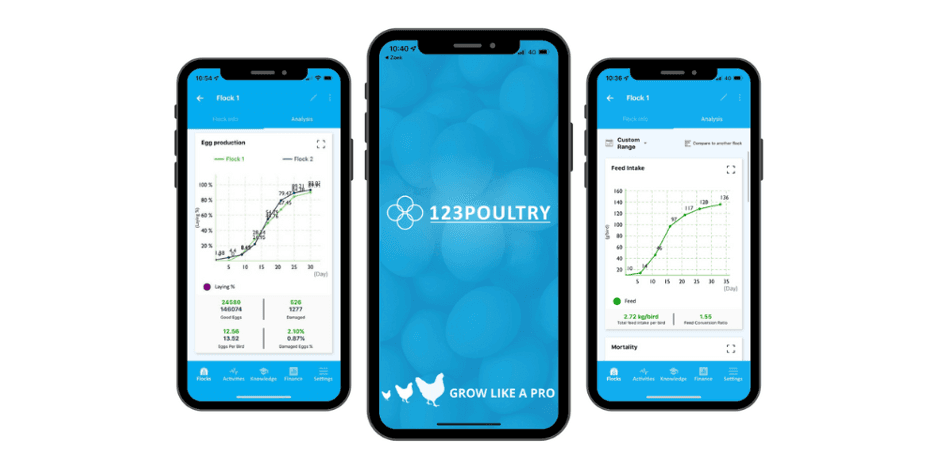
10. Track Farm Performance Digitally
Successful farms depend on accurate data.
The 123POULTRY App helps farmers monitor:
Feed intake
Egg production
FCR
Mortality
Income and expenses
By tracking performance in real time, you can identify problems faster and make better management decisions.
How Champrix Can Help Improve FCR
At Champrix, we understand that every market and every farm is different. Our poultry nutrition specialists work with feed mills, distributors, integrators, and farmers to develop feed solutions that improve performance while controlling feed costs.
Our poultry portfolio includes:
Tailor made nutritional solutions based on your locally available raw materials
Our goal is simple: help farmers achieve better egg production, stronger flock health, and improved feed efficiency.
Conclusion
Improving FCR in layer hens is one of the most effective ways to increase profitability. By combining quality nutrition, strong flock management, feed safety measures, and consistent performance monitoring, farmers can achieve more eggs from every kilogram of feed.
Small improvements in FCR can result in significant savings over time.
Ready to Improve Your FCR?
Looking for a premix, concentrate, or feed additive solution tailored to your market?
Contact Champrix Animal Nutrition today and discover how our poultry nutrition experts can help improve feed efficiency, egg production, and farm profitability.
Learn more at Champrix.com or speak with one of our poultry specialists.
Feed represents the largest cost on most layer farms. That is why improving your Feed Conversion Ratio (FCR) is one of the fastest ways to increase profitability. A better FCR means your hens produce more eggs from the same amount of feed, resulting in lower production costs and higher returns.
In this article, you will learn what FCR is, how to calculate it, and which nutritional and management strategies can help you improve FCR in layer chickens.
What is FCR in Layer Farming?
Feed Conversion Ratio (FCR) measures how efficiently hens convert feed into eggs. It is calculated as:
FCR = Feed Intake (kg) ÷ Egg Mass Produced (kg)
For example:
Feed consumed: 30 kg
Egg production: 15 kg
FCR = 30 ÷ 15 = 2.0
The lower the FCR, the better your flock is utilizing feed.
Why FCR Matters
A good FCR helps to:
Reduce feed costs per egg produced
Improve farm profitability
Increase efficiency of production
Monitor flock performance
Detect nutritional or management issues early
For many commercial layer operations, FCR typically ranges between 2.0 and 2.5, although actual performance depends on genetics, age, feed quality, housing, management, and environmental conditions.
How to Calculate FCR on Your Farm
Measuring FCR regularly helps you track improvements and identify potential problems.
To easily measure the FCR in your flock, follow these simple steps:
Step 1: Record Feed Intake
Weigh and record the total feed provided during a specific period.
Weigh the feed - Record the weight of the feed provided to the hens during the measurement period.
Step 2: Measure Egg Production
Record the total number of eggs produced by the flock.
Collect egg data - Keep track of egg production over the measurement period by recording the total number of eggs produced by the flock.
Step 3: Calculate Egg Mass
Determine the average egg weight and multiply it by the total number of eggs produced.
Weigh the eggs - Weigh a representative sample of eggs produced during the measurement period and calculate the average egg weight. Multiply this average egg weight by the number of eggs produced during the measurement period.
Step 4: Calculate FCR
Use the formula FCR = Feed intake (kg) / Egg production (kg).
For instance, if your hens consumed 30 kg of feed and produced 15 kg of eggs, the FCR would be (30 kg / 15 kg) 2,00.
Tracking FCR every week provides valuable insight into your farm's performance and profitability.
The average FCR can vary depending on various factors, including genetics, nutrition, management practices, and environmental conditions. However, a commonly accepted range for FCR in laying hens is between 2,5 and 4,0. This means that, on average, it takes 2,5 to 4,0 kilograms of feed to produce one dozen (12) eggs. It is good to know what your FCR is now so you can improve your FCR in the future.
10 Effective Ways to Improve FCR in Layers
Optimizing the FCR is crucial for reducing production costs and maximizing profitability. Following are some effective strategies to improve the FCR in layer hens:
1. Feed a Balanced Layer Diet
Layer hens require the correct balance of energy, amino acids, vitamins, and minerals to maintain high egg production.
Nutritional deficiencies can lead to lower feed efficiency, reduced egg production, and poorer shell quality.
2. Use High Quality Ingredients
Feed ingredients with good digestibility allow birds to absorb more nutrients from every kilogram of feed.
Poor quality ingredients can reduce nutrient availability and increase feed wastage.
3. Optimize Amino Acid Balance
Digestible amino acids such as lysine and methionine play a major role in egg production and feed efficiency.
Proper amino acid levels help layers maintain production without excessive feed consumption.
4. Choose the Right Premix or Concentrate
A well formulated premix or concentrate helps ensure consistent nutrient supply and optimal performance.
Champrix Layer Premixes and Champrix Layer Concentrates are developed to support efficient egg production by providing balanced vitamins, minerals, amino acids, and performance supporting ingredients. These solutions are designed to help farmers achieve better productivity and improved feed efficiency.
5. Support Feed Safety
Mycotoxins and mould contamination can reduce feed intake, impair nutrient absorption, and negatively affect egg production.
Using a toxin binder such as Champ-Tox can help support feed safety and maintain flock performance when feed contamination risks are present.
6. Reduce Heat Stress
High temperatures often lower feed intake and reduce egg production. Maintaining a temperature between 15 and 25°C helps to prevent stress and heat-related issues.
To minimize heat stress:
Provide adequate ventilation
Ensure continuous access to clean, cool water
Reduce overcrowding
Use appropriate cooling strategies where necessary
7. Provide Correct Lighting
Layer hens generally require a consistent lighting program to support production and maintain feed efficiency. Providing a minimum of 14 hours of light per day.
Sudden lighting changes can create stress and negatively affect performance.
8. Maintain Good Flock Health
Healthy birds convert feed more efficiently than sick birds.
Focus on:
Vaccination programs
Biosecurity measures
Disease prevention
Regular cleaning and disinfection
9. Monitor Feed Wastage
Feed lost through poor feeder management directly impacts your FCR.
Check feeder height, equipment condition, and feeding space regularly.
10. Track Farm Performance Digitally
Successful farms depend on accurate data.
The 123POULTRY App helps farmers monitor:
Feed intake
Egg production
FCR
Mortality
Income and expenses
By tracking performance in real time, you can identify problems faster and make better management decisions.
How Champrix Can Help Improve FCR
At Champrix, we understand that every market and every farm is different. Our poultry nutrition specialists work with feed mills, distributors, integrators, and farmers to develop feed solutions that improve performance while controlling feed costs.
Our poultry portfolio includes:
Tailor made nutritional solutions based on your locally available raw materials
Our goal is simple: help farmers achieve better egg production, stronger flock health, and improved feed efficiency.
Conclusion
Improving FCR in layer hens is one of the most effective ways to increase profitability. By combining quality nutrition, strong flock management, feed safety measures, and consistent performance monitoring, farmers can achieve more eggs from every kilogram of feed.
Small improvements in FCR can result in significant savings over time.
Ready to Improve Your FCR?
Looking for a premix, concentrate, or feed additive solution tailored to your market?
Contact Champrix Animal Nutrition today and discover how our poultry nutrition experts can help improve feed efficiency, egg production, and farm profitability.
Learn more at Champrix.com or speak with one of our poultry specialists.

Expertise that Empowers
At Champrix, we offer extensive practical knowledge across a wide range of feed solutions. We go beyond expertise and actively guide our partners through every step of their journey.
READ MORE
Expertise that Empowers
At Champrix, we offer extensive practical knowledge across a wide range of feed solutions. We go beyond expertise and actively guide our partners through every step of their journey.
READ MORE

Expertise that Empowers
At Champrix, we offer extensive practical knowledge across a wide range of feed solutions. We go beyond expertise and actively guide our partners through every step of their journey.
READ MORE
Expertise that Empowers
At Champrix, we offer extensive practical knowledge across a wide range of feed solutions. We go beyond expertise and actively guide our partners through every step of their journey.
READ MORE
Expertise that Empowers
At Champrix, we offer extensive practical knowledge across a wide range of feed solutions. We go beyond expertise and actively guide our partners through every step of their journey.
READ MORE
Expertise that Empowers
At Champrix, we offer extensive practical knowledge across a wide range of feed solutions. We go beyond expertise and actively guide our partners through every step of their journey.
READ MORE
Expertise that Empowers
At Champrix, we offer extensive practical knowledge across a wide range of feed solutions. We go beyond expertise and actively guide our partners through every step of their journey.
READ MORE
Expertise that Empowers
At Champrix, we offer extensive practical knowledge across a wide range of feed solutions. We go beyond expertise and actively guide our partners through every step of their journey.
READ MORE
Expertise that Empowers
At Champrix, we offer extensive practical knowledge across a wide range of feed solutions. We go beyond expertise and actively guide our partners through every step of their journey.
READ MORE
Expertise that Empowers
At Champrix, we offer extensive practical knowledge across a wide range of feed solutions. We go beyond expertise and actively guide our partners through every step of their journey.
READ MORE
Expertise that Empowers
At Champrix, we offer extensive practical knowledge across a wide range of feed solutions. We go beyond expertise and actively guide our partners through every step of their journey.
READ MORE
Expertise that Empowers
At Champrix, we offer extensive practical knowledge across a wide range of feed solutions. We go beyond expertise and actively guide our partners through every step of their journey.
READ MORE

Contact us
Stay Updated!
Subscribe to our mailings and be the first to hear about the latest research, innovations, and expert tips from Champrix.






Follow us
Stay Updated!
Subscribe to our mailings and be the first to hear about the latest research, innovations, and expert tips from Champrix.
Contact us
Stay Updated!
Subscribe to our mailings and be the first to hear about the latest research, innovations, and expert tips from Champrix.
Follow us